

Microneedling vs Microchanneling
Collagen Induction Therapy (CCIT) and intentional skincare

Since my last post, I’ve had a number of subscribers and clients reach out wanting to know more about microchanneling and whether it’d be a good fit for them. Others were still confused as to the difference between microneedling, microchanneling, and other needle-involved treatments mentioned.
One of the main reasons clients reach out to inquire about my microchanneling service is because they are also exploring their own readiness to use injectables, such as filler or Botox. For reasons such as overhype on social media, hearing horror stories from a friend of a friend, and uncertainty of results/outcomes…people tend to be apprehensive about injectable skincare treatments and are seeking what they consider to be more “natural” alternatives.
Consider this post one of many in my attempt to help strip away the mystery, fear, and confusion around some of today’s popular skincare treatments. Because part of my skincare philosophy - and my goal with skin Rhythm - is to help make skincare ritualistic and simple. And we can’t achieve that if we’re bogged down with confusion, misinformation, or pressured to take on treatments we’re not 100% sure about.
So let’s start with collagen induction therapy, aka microneedling: what it is, how it works, and how I incorporate it into my personal routine and professional services.
What It Is
All forms of microneedling that you may have heard of are a part of treatments known as collagen induction therapy (CCIT). The National Institute of Health (NIH) defines this as a procedure where tiny needles create microscopic punctures in the skin, stimulating a natural repair process that increases collagen and elastin production.
“Microneedling, also known as collagen induction therapy, is a minimally invasive dermatological procedure that has gained widespread popularity for treating various skin conditions, including acne scars, wrinkles, hyperpigmentation, and stretch marks. [...]Over the past few decades, microneedling has evolved significantly, with advancements such as automated devices, radiofrequency microneedling, and combination therapies enhancing its effectiveness and safety profile.”1
How CCIT Works
Collagen induction therapy essentially works like this: we take a device with small needles (examples listed further below), to create controlled micro-injuries in the skin.
The creation of these “injuries” stimulates the body’s own natural healing processes, triggering the immune system to work rapidly to repair the site(s) of injury. The process of this repair response in the skin involves a complex system of cells that are actively working to ensure the body remains uncompromised - they key function of our immune system!
In this effort, the skin creates more collagen and elastin which are essential for maintaining skin elasticity, firmness, and overall health. This is all happening at a microscopic level in the epidermis and dermis, but what we see on the outside is increased skin firmness, elasticity, reduced markings and/or pigmentation, and general improved quality of the skin.
Types of Microneedling Devices
As suggested above, there are many different forms of collagen induction therapy. Here’s a quick rundown of the most common and accessible methods:
Dermarolling. This method involves using a small, handheld device that looks like a rolling pin with needles. The rolling pin is pushed and pulled across the face in a back and forth motion to create the tiny injuries mentioned before. The needles on this device are typically very shallow and superficial (i.e., do not penetrate deeply).
Microneedling. The most popular and well-known method, it typically involves dragging a pen-like device with small needles across the skin to create deeper injuries (similar to a tattoo gun). These devices typically come with a variety of needle sizes, ranging from .25mm all the way to 2.0 mm. Practitioners and users can easily adjust the depth of the microinjury by using longer needles or needle tips with more or less density of needles.
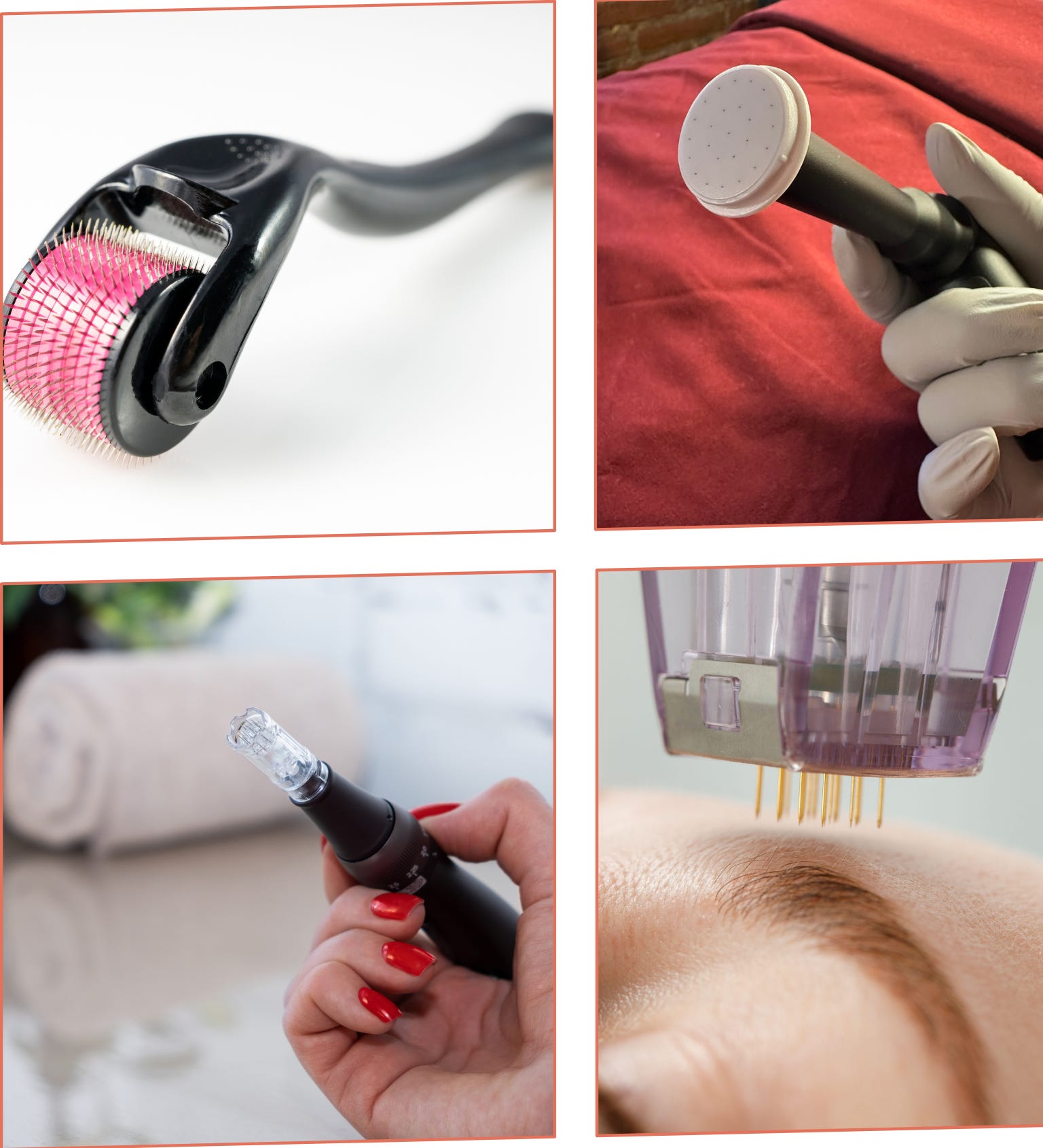
Microchanneling. This method is similar to microneedling but with a modified approach. This device uses a stamping technique rather than dragging, which causes less trauma to the skin, minimal-to-no bleeding, and reduced downtime. Microchanneling was introduced to the market via Procell Therapies and is my preferred method of CCIT that I use both personally and in my skincare studio.
Radiofrequency Needling. This method is probably one of the newest and most advanced, made popular by the Morpheus8, a device that combines microneedling with radiofrequency therapy for skin tightening and rejuvenation. Radiofrequency creates friction and heat which helps to create a tightening effect on the skin.
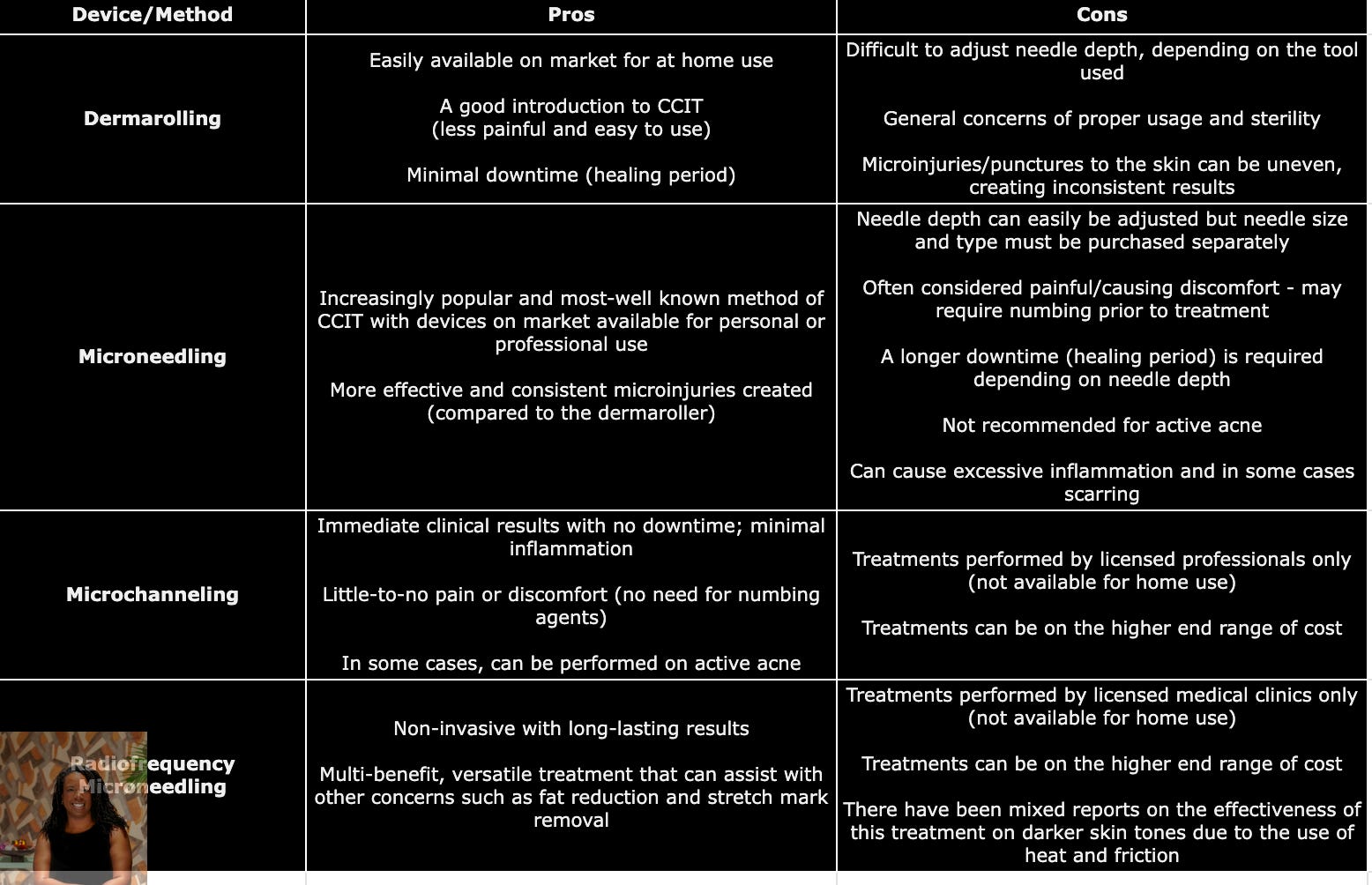
All of these devices have their pros and cons which I’ve summarized in the table below. In sum, their key differences are technique/device, and varying degrees of usability and accessibility to the average consumer.
I also think it’s important to call out that definitions of pain tolerance may differ for each person. For example, while I find the Procell microchanneling device to be painless, I have had some clients describe it on a range from slight discomfort, ticklish, and even downright painful. So use your best judgement and anticipate at least a slightly uncomfortable sensation regardless of the modality of CCIT being used.
And in case you’re wondering, I go into greater detail on why I chose Microchanneling and the company I use in my latest post:

Who is it for? What it can help with
CCIT is ideal for those looking to improve overall skin health, reduce signs of aging, and address concerns such as scarring, hyperpigmentation, and uneven skin tone. It is safe for all skin types and colors.
However, it is generally NOT recommended for individuals with compromised immune systems or other acute skin conditions. So be sure to consult with a physician before you dive into any CCIT treatment. It is also important to note that not every modality is ideal for skin conditions such as active acne. In these instances, it’s best to consult a professional.
What to expect with the Radiance Transformation Microchanneling Treatment at sbC
At the request of a few readers, here’s a quick glance of what to expect when you visit me for a microchanneling treatment:
First, we start with cleansing and gentle exfoliation - making sure we are working on clean, dry skin; I also check to ensure that the skin is in healthy condition to proceed with the treatment (no cuts, open wounds, rashes, etc.).
Next, we begin microchanneling! As I microchannel, I am rolling on a growth factor serum to both lubricate the skin and impart it with the nutrients that will help the skin begin to heal and tackle the concerns being addressed. We’ll get more into growth factors in a future post, but for now, just know that growth factors are little protein molecules that aid in cell renewal - meaning that they help grow and repair damaged cells.
We later use LED Therapy to help speed up the healing process to minimize downtime and ensure there are no open wounds/abrasions; think of it like "closing the skin". This is then followed up by a hydrating sheet mask used to continue aiding in the healing process, it also soothes and calms down the skin; I don't use any other products after on the skin so this mask is key to wrapping up the service. (But I do provide a little lip balm and brush the eyebrows so clients can leave looking put together and less like they've been in a fight with an alley cat! 😅)
As we wrap up, I treat clients to a shot of liposomal Vitamin C supplement as an added boost to the immune system (to support in healing and rejuvenation). And clients who’ve purchased a series treatment package also go home with additional after-care products, including a personalized treatment plan with product recommendations for skincare and supplements. These are all meant to aid in the skin’s renewal process, enhancing and extending treatment results.
Since launching Procell’s microchanneling treatment in my studio back in March, I’ve helped a number of clients with various skin concerns such as:
Reducing fine lines & wrinkles, especially in areas like around the eyes, forehead, and smile lines
Improving skin tone & texture on clients with deeper complexion
Fading acne scars & hyperpigmentation - I’m my own test subject and a testament to its effectiveness!
Minimizing sun damage, particularly for mature clients
Enhancing collagen & elastin production for more bouncy and firm texture
Stimulate hair growth and minimize hair loss
Again, with all of my treatments and my general approach to skin care, is to make sure my treatments can easily fit into your lifestyle.
Extensive downtime can get in the way of consistency.
Scarring and undue trauma to the skin can hinder and even reverse results.
And painful, intensive treatments are simply not necessary to have great results.
Thus, my treatment protocol was made with this in mind: to treat you and your skin kindly and to aid in its recovery so that you get the most out of the treatment.
I know today’s post was heavy on scientific and technical jargon, but I hope you’ve found today’s post helpful in understanding CCIT and determining whether this might be a good fit for you and your skincare goals.
Check back in as I’ll be discussing in more depth growth factors, PDRN, and injectables, along with some more helpful product recommendations. In the meantime, here’s to good skin! ;)
-Corrinne
And if you’re interested in giving any of the CCIT devices mentioned a try, here are my top recommendations:*
Dermaroller Starter Kit. This set on Amazon will help you get started. It includes ampoules of medical-grade hyaluronic acid, soothing aftercare masks, and cleaning solution to help keep your device clean and sanitized.
Easy-to-Use Microneedling Pen. This device is a great starter set that contains enough microneedle tips to help you build a consistent regimen. I also recommend this hyaluronic acid+B5 serum by Cosmedica - a reputable brand with quality ingredients.
Microchanneling Services. You can find a local practitioner in your area via Procell Therapies’ directory of trained professionals or consider booking with me.
Morpheus8 Services. The manufacturer, InMode, also has a global directory of practitioners and approved medical clinics.
*Some of the products I mention above are linked through Amazon. If you decide to purchase using these links, I may earn a small commission at no extra cost to you. I only share what I genuinely love, use, and can (hopefully!) find here in Mexico. 😉
Jaiswal, Sharwari, and Sugat Jawade. “Microneedling in Dermatology: A Comprehensive Review of Applications, Techniques, and Outcomes.” Cureus vol. 16,9 e70033. 23 Sep. 2024, doi:10.7759/cureus.70033